

Microsoft Research examines offloaded inference for robotics
Microsoft Research published a post on September 23, 2026, titled “Offloaded inference for real-world physical AI robotics.” It considers where AI inference should run for physical robot tasks, focusing on moving some computation off the robot. The reported evaluation concerns mobile robotic manipulation and representative models across three areas: semantic mapping and planning, navigation, and manipulation.
What the evaluation covered
The three areas describe different kinds of work in the evaluated mobile manipulation setting. Semantic mapping and planning, movement through an environment, and manipulation are all within the scope specified by the article. The findings therefore refer to these workloads. The supplied information does not establish that the same results apply to every robot, model, or task.
Microsoft Research says that offloading physical AI inference improved response time, accuracy, battery lifetime, and cost in the evaluated workloads. This is the article’s reported conclusion about its evaluation. For readers considering a robotic system, the comparison brings several measures into view at once: whether the robot can accommodate the models, how promptly it responds, how accurately the models perform, and what happens to battery use and cost.
Limits of onboard computing
The article reports that some smaller GPUs could not accommodate the mobile manipulation stack. Having enough memory was not the only consideration: on GPUs that could run the stack, mapping and planning slowed by as much as 383 percent compared with an A100. That figure describes the maximum slowdown reported in the evaluation, rather than a universal result for every device or workload.
For navigation, the article reports a 30 percent drop in timely obstacle detection on lighter GPUs. It also says smaller GPUs reduced VLA model accuracy by 50 percent, even though those models were not slowed dramatically. In other words, the reported comparison does not equate execution speed with model accuracy. These separate measurements help explain why assessing a robot’s compute setup requires attention to more than how quickly a model runs.
Performance and battery use
Simply choosing a larger onboard GPU also has a cost in the comparison described. The article says larger onboard GPUs, such as Jetson Thor, drained robot batteries by up to 160 percent. This is a result as reported for that comparison. Alongside the findings about smaller GPUs, it points to a tension between running demanding computations on the robot and the energy draw of the larger onboard hardware.
Offloading changes where inference takes place. Microsoft Research says this improved several measured outcomes in the evaluated workloads. The supplied facts do not give a general rule for how every robotic system should divide its computation. They support a narrower takeaway: for the workloads examined, the article reports benefits, while its comparisons also make response, accuracy, battery lifetime, and cost relevant together.
The Physical AI Toolchain
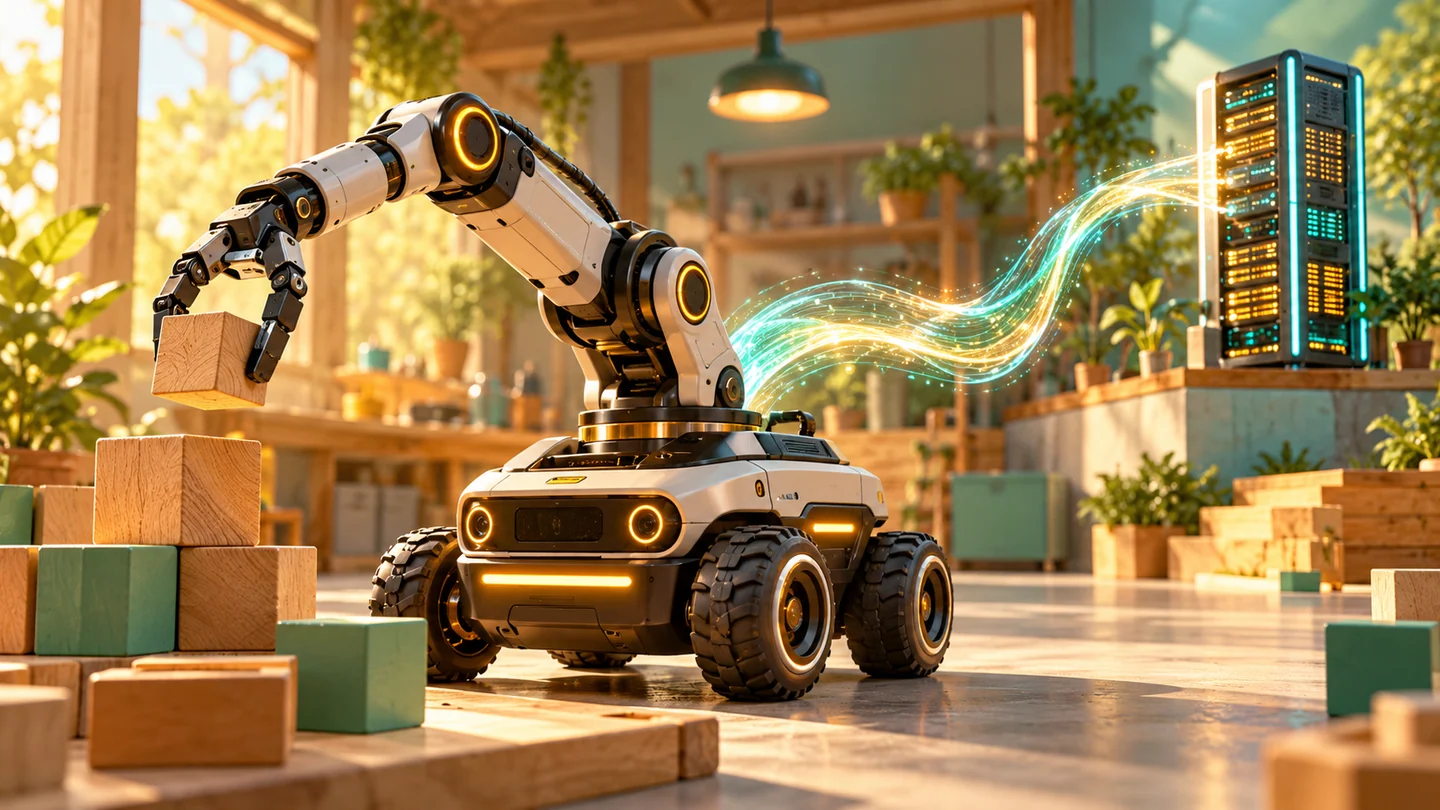
Microsoft Research describes a Kubernetes-based toolset for containerizing robotics workloads and offloading them across robot compute, edge GPUs, and the cloud. This describes the infrastructure associated with the approach in the article. The information provided here does not establish additional capabilities, availability details, or results beyond the claims stated about the toolset and evaluation.
The post says the Physical AI Toolchain added offloaded physical AI inference for robots. It also includes example projects for offloading inference of a SO-101 and a UR10e. These named projects connect the toolchain description to specific robot examples in the article. They make the described work concrete without expanding the reported findings beyond the evaluated workloads.
How to read the results
The reported limitations concern different parts of the system. Some smaller GPUs could not fit the mobile manipulation stack; mapping and planning could slow on GPUs with sufficient memory; timely obstacle detection dropped on lighter GPUs; and VLA model accuracy fell even without a dramatic slowdown. Larger onboard GPUs, meanwhile, were associated with higher battery drain in the described comparison. Together, these observations provide the context for the article’s interest in offloading inference.
The central claim remains bounded to the study described by Microsoft Research: offloading improved response time, accuracy, battery lifetime, and cost for the evaluated mobile robotic manipulation workloads. The post also describes Kubernetes tools for moving containerized workloads among robot compute, edge GPUs, and the cloud, plus example projects for the SO-101 and UR10e. Those are the specific findings and implementation details provided in the supplied account.